 August 6th, 2011
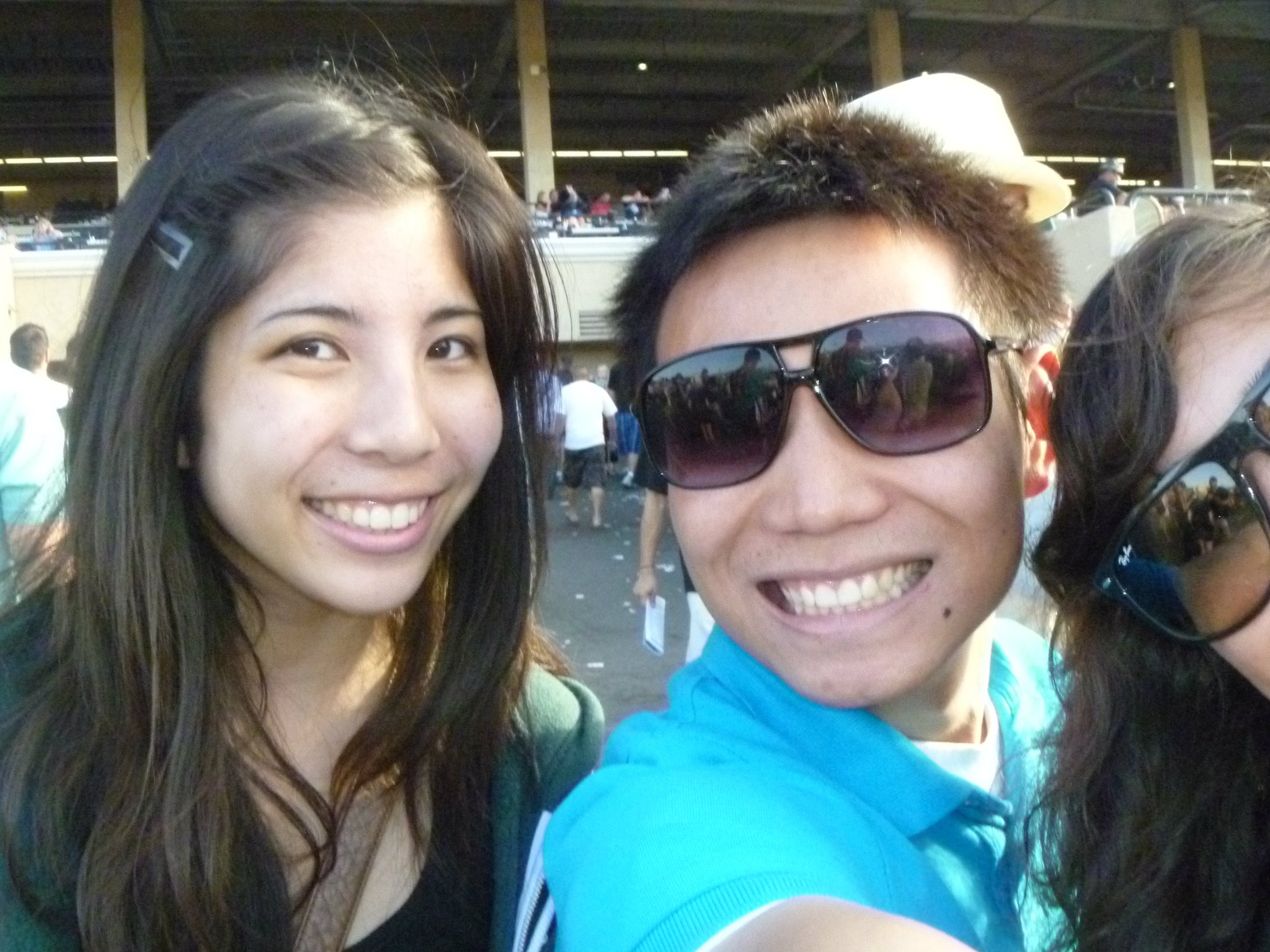
I woke up this morning the absolute best way I knew how: by laying in bed and watching TV shows. It was a very bittersweet moment reminiscent of my childhood as I watched various episodes of Degrassi (instead of Saturday Morning cartoons) before finally getting up and showering. When all was said and done, I spent the morning playing Tetris, eating the last of my milk with cereal, and slowly awaiting the ultimate plan for the day: Weezer concert. Michelle came over and we anxiously awaited Pam’s arrival to come pick up us. She picked us up, and we went to Old Town to go find her missing sunglasses she left at a restaurant last night. She successfully found it, we got some parking verified at Horton Plaza, before finally heading to the ultimate destination of Del Mar. With it being my second day there, we parked in the same $8 lot we parked yesterday, and walked on over to the concert fair grounds. We legitimately saw a horse race (it was super fast), before pushing our way to the middle of the crowd for Weezer. They were amazing as I snapped a picture for my day. They were equally as good last year, and I especially liked their cover of “Pumped up Kicks”. They were definitely entertaining. The next portion of the day resulted in Pam, Michelle, and I being lost – we were unable to find our car, and walked around in circles for 30 minutes before bumping into it again (we were walking in the wrong direction). By the time we got out, we were all extremely hungry so we decided to drive to “Tofu House” to try to get food. After minutes of searching for it, we finally found it, but it was closed, so we settled for some delicious In&Out. YUM, SHAKE, FRIES, & A BURGER. We talked and exchanged some stories the rest of the night before going home. Fun Times. Cool Story Bro.